
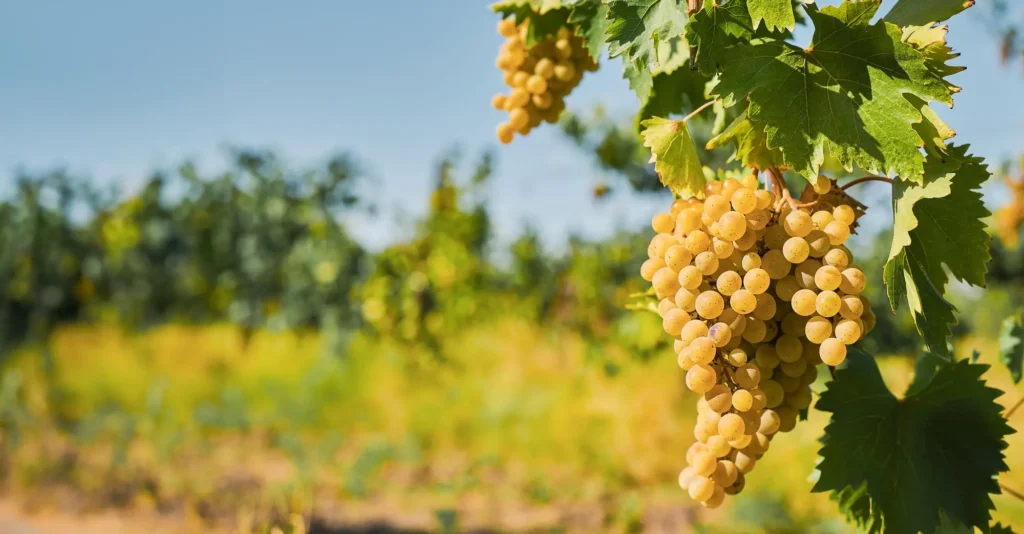
Suddenly you find yourself sitting with the wine list, and you realize: Tokaji wines show different characters not only by winery but also by village. One furmint is steely and tight, as if it had flowed down from a mountain peak. The other is round, rich, soft, as if it had captured the warmth of an autumn by the riverside. Yet both are Tokaji. Both are furmint. Both are from the same vintage.
The Galuschka wine list is particularly worth picking up for one reason: the wines are arranged not only by winery but also by terroirs and villages. This is no coincidence. In Tokaj-Hegyalja, you can actually feel in the glass where the wine comes from. What kind of soil the grapes grew in, which direction the vineyard faced, what the microclimate of that vintage was like. This is called terroir, and it is a concept that seems like a winemaker's technical term, but in reality, it is a very simple thing: it means that the taste of the place is in the drink.
Tokaj-Hegyalja is fundamentally a volcanic region. Fourteen million years ago, there was significant volcanic activity here, and what remained afterward was not only a hilly landscape but also a special rock world. On the hillsides, there is rhyolite tuff, which is nothing more than volcanic ash and debris compressed over millions of years, pressed into a solid rock rich in minerals and mineral salts. Around Mád, this rock is particularly close to the surface, and the grape roots live directly in it. This is what brings that characteristic stony, salty, mineral taste to Mád wines, which many cannot precisely name but recognize once tasted. That is why they say that in Mád, the volcano speaks in the glass. It is not a metaphor. Geology is tasteable.
In Tarcal, this rock base sinks deeper, the surface is more loess, the soil is softer, and the proximity of the Bodrog provides a warmer microclimate. That is why Tarcal wine is different. Tállya points in another direction again. Around the city of Tokaj, the confluence of the two rivers creates a special humid autumn, which is most favorable for the aszú berries.
This article is about how to think about this when choosing your next glass of Tokaji. It is not a wine guide in the classical sense, but rather a charming map where the taste of the wines leads.
Why does it matter which village the Tokaji wine comes from?
Before anyone says that Tokaji is Tokaji, it is worth knowing that Tokaj-Hegyalja is the world's first closed wine region. The royal decree of 1737 not only defined the borders of the wine region but also listed the names of the 27 settlements within it, from whose grapes authentic Tokaji wine can be made. This was years ahead of the first similar regulations in French wine regions.
Even older is the knowledge that the vineyards – the individual grape parcels – are not the same. The 1720 vineyard classification first categorized the quality levels of the Tokaj-Hegyalja growing sites, decades before the Bordeaux grand cru system. (Source: tokajiborvidek.hu) Today's winemaker, when linking their wine to Mád, Tarcal, or Tállya, continues this tradition.
The differences are primarily based on geology. The subsoil of Tokaj-Hegyalja was formed from volcanic activity 14 million years ago: rhyolite, andesite, and their tuffs make up the rock framework, upon which various thicknesses and compositions of soil layers have accumulated. In Mád, rhyolitic tuff and zeolite dominate. In Tarcal, the proportion of loess is higher, and the climate is warmer due to the proximity of rivers. In Tállya, andesite is more present, and the wind is more pronounced. At the city of Tokaj, the confluence of the Tisza and Bodrog creates microclimatic conditions that are particularly favorable for botrytization.
These differences are indeed perceptible in the glass, provided that someone pays attention to them.
Mád: where we feel the “flavor” of the volcano in the glass
Mád is the place where Tokaji wine most often has a hint of salt. Not figuratively: the Mád furmint has a fine salty-mineral bond, which many describe as iodine-like or gravelly, and which gives the wine a truly unique character. The basis for this can be found in the soil: the Mád vineyards sit on a rhyolitic tuff base, whose zeolite content is exceptionally high throughout the Tokaji wine region and is characteristic of every Mád parcel.
Mád is one of the most densely parcelled areas of the wine region – it bears vineyard names such as Király, Betsek, Nyulászó, Úrágya, Középhegy, or Danczka. These are not just geographical designations: they represent different soil types, exposures, altitudes, and wine characters. Úrágya produces rocky, tight, and long-evolving furmints; richer, fuller wines are born from the deeper soils of Betsek; in Nyulászó and Középhegy, hárslevelű feels more at home, where its softer, honeyed side appears accompanied by vibrant acidity.
On the Galuschka wine list, the Mád section is the densest – which is no coincidence, as today Mád is one of the most important intellectual and professional centers of the Tokaji wine region. István Szepsy has been crafting the Úrágya Furmint 73 with experimental, precise care for decades: this wine pulls not towards fruit, but towards stone and salt. The Holdvölgy Betsek furmints are deeper and more layered. The Zsirai Pince Nyulászó furmint and Középhegy hárslevelű masterfully express the vineyard character. The Barta Pince Öreg Király furmint comes from one of the most notable Mád vineyards, the steep terraced Király Hill – from grapes whose red rhyolitic tuff soil gains its mineral depth from zeolite and clay. The aged offerings of Lenkey Pince, including the ten-year-old Bomboly hárslevelű, showcase what the Mád terroir is capable of in the long term.
Mád wine generally learns to wait patiently. Young, it is tight, lively, and sometimes a bit reserved. It begins to open up two to three years after harvest, and sometimes only shows the depth worth being patient for after five to ten years.
Tarcal – roundness and warmth near the Bodrog
If Mád represents sharpness and lean precision, then Tarcal is more about warmth and roundness. The difference is geological: the loess ratio is higher at Tarcal's borders, and the volcanic bedrock is further from the surface. This means softer, more easily dissolvable soil, and the roots of the vines extend differently into this material. The proximity to the confluence of the Tisza and Bodrog creates a warmer microclimate, with a longer growing season and deeper fruit ripening capacity. (Source: Royal Tokaji – Our Vineyards; Magyar Mezőgazdaság – tarcali varietal experiments)
The most famous vineyard in Tarcal is Mézes Mály. It was rated first in the vineyard classification during the Rákóczi era, and has since remained one of the most famous Tokaji wine regions. Its name (mézes + mály, meaning honeyed slope) describes what the wine also suggests: a honeyed, fuller, warming character, while the volcanic base also provides a mineral backbone. From the Galuschka's Tarcal section, the Majoros Estate's wines are the Agyag Hárslevelű 2021 and the Basic Instincts Furmint 2018. The word Agyag in the wine name is not a poetic metaphor – it refers to the clay-rich soil of Tarcal, which gives the hárslevelű a softer, richer, honeyed tone. The Basilicus winery's wine made from the Kabar grape variety brings an old Tokaji crossing back to the table – Kabar is characterized by its spicy, exotic line. The Száraz Szamorodni 2012 exemplifies that Tarcal is also strong in the tradition of long-aging, complex dry white wines.
Tarcal wines are generally more approachable when young than those from Mád. They welcome the stranger better. It is not primarily about waiting, but about the moment – at a dinner table where the wine opens, not closes.
Tállya – strength and character on the western side of the wine region
Tállya stands out a bit from the public consciousness of the Tokaji wine region – and this may be an injustice. Among the 27 settlements of Tokaj-Hegyalja, Tállya is one of the richest in once first-class vineyards, but a decisive portion of these now lies fallow; more than a quarter of the historically recognized unplanted vineyards in the wine region are located within Tállya's borders.
The bedrock in Tállya is also volcanic, but the ratio of andesite differs from the riolites dominating Mád, characterized by stony, leaner, less cohesive soils. The microclimate is more extreme: the free winds of the hills hit the vines more forcefully, there are fewer diseases, but the fruit ripening is also different. As a result, Tállya wines are traditionally higher in acidity, tighter, and more powerful.
Tállya's special pride is the dry szamorodni: within the Tokaji wine region, Tállya is one of the most recognized areas in this wine category. Szamorodni comes from a Polish word meaning "as it was harvested." It is made from bunches harvested together with botrytized grapes, and its dry version undergoes oxidative aging, something that wine drinkers often feel is akin to fino sherry: walnut, almond, salty biscuit, dry aromatic notes.
Currently, Tállya does not appear as a separate chapter on Galuschka's wine list, and Tállya wines do not make it into every restaurant selection. However, this does not mean they are worthless. Anyone who tastes Tállya's dry szamorodni once understands why many consider it one of the most mysterious and exciting chapters of the Tokaji wine region.
Which wine do you want?
Mád
Mineral, tight, salty. For fish, cheeses, or on its own.
Tarcal
Round, fruity, friendly. For the first glass, for lighter evenings.
The city of Tokaj
Versatile. Dry during meals, with sweet wine at the end of the evening.
Are you uncertain with the wine list? Ask the service, they will help you.
The city of Tokaj stands where the rivers make sweet wine.
Tokaj itself, the city, did not accidentally give its name to the entire wine region. Where the Tisza and Bodrog meet, something special happens every season: the fog rising from the rivers covers the hillsides in the morning, the autumn days warm up, then the nights cool down again. This is the microclimatic rhythm that best favors the noble mold Botrytis cinerea and produces the aszú berries. Therefore, the vineyards around the city of Tokaj are extremely valuable for aszú production.
The Hétszőlő is one of the most famous vineyards of the city of Tokaj – its name comes from the fact that in the past it consisted of seven different grape parcels. Today, the Tokaj Hétszőlő winery is its most important owner. The Kis Garai furmint is fine and elegant, while the Nagyszőlő vineyard's aszú is the embrace of Tokaj's past and present in a single glass.
The wine list at Galuschka is particularly rich and varied in the Tokaj section. The Gizella Pince Barát Hárslevelű Monopole is a wine from a single vineyard monopoly owner: this means that the grape parcel is exclusively owned by one winemaker. The Dobogó Betsek furmint interestingly connects the city of Tokaj with the Mád Betsek vineyard name, reminding us that the vineyard system does not always follow administrative boundaries. The Erzsébet Pince Király Dűlő Grand Cru and Zafír vineyard Premier Cru selections bring back the thinking of Tokaj classification into the glass. Balassa's wine, the Betsek Furmint 2024, represents the fresh and modern Tokaj white style.
The character of Tokaj city wines is intermediate: they are less tight than the Mád selections, but not as rounded as those from Tarcal. They are more diverse, more open, and perhaps for this reason, they connect most naturally with aszú wines as well.
What does the glass say? This is how to choose from the Galuschka wine list!
If someone asks which Tokaji to request for dinner, the most honest answer is: it depends on what you expect from it. This is not a sidestep; it is one of the most beautiful properties of the Tokaj wine region. You can request wine of the same variety from different villages with the same dryness, yet receive different experiences.
The Mád wines on the Galuschka wine list are best suited for the table when someone wants to excite the tasting brain: they ask for mineral, tight, long-lasting white wines, perhaps alongside fish, soft cheeses, or just on their own, sipped slowly. The Tarcal selections are friendlier for the first glass, for the introductory courses, for a lighter evening. The Tokaj city wines are versatile: the dry furmints work well during meals, while the aszús are meant for an entire evening, as dessert, or rather instead of dessert.
The Borkóstolók chapter on the Galuschka wine list also provides guidance. The Tokaj Száraz Oldala tasting takes you through six types of dry Tokaji, showcasing exactly the diversity that this article is about: six glasses, six different vineyard perspectives. The Édes Álmok tasting takes you through the sweeter style Tokaji wines, from late harvests to szamorodni to aszú.
The most important advice: if you are uncertain with the wine list, ask. The service at Galuschka can help, precisely because the wine selection has been thought through according to villages, winemakers, and styles. It is not by chance that it is assembled this way.
The difference comes from the soild
Tokaj-Hegyalja is a rare place where you don't have to choose between tradition and curiosity: both are present, side by side, on the same wine list. The distance between a furmint from Mád and a hárslevelű from Tarcal is no greater than a few kilometers, and yet, if you pay attention, you open completely different worlds with them.
The Galuschka wine list is intentionally organized by villages and terroirs. This mindset suggests that the guest arriving at the restaurant should not only come to drink but also to get to know. To get to know Tokaj – not just the town, but the landscape from which every drop of wine in the glass has been told.
The next time you sit over a glass of Tokaji, it's worth pausing for a moment. To ask where it's from. To listen to the answer. The best Tokaji experiences are not born by chance – but by attention.