
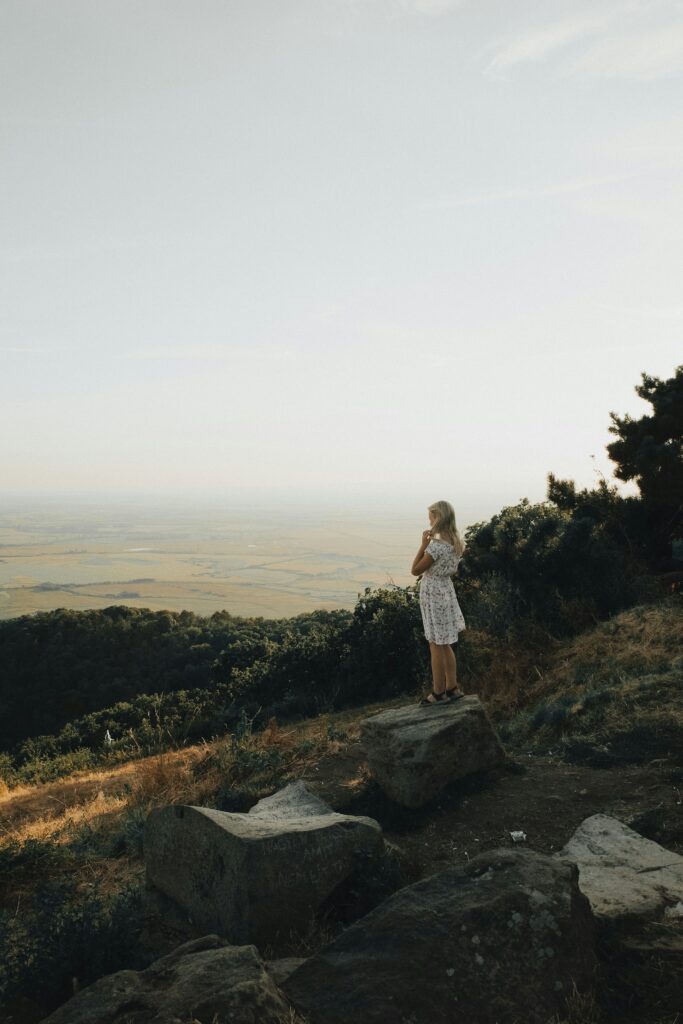
Tokaj as a UNESCO World Heritage Site: what lies beyond the wine map?
In 2002, Tokaj was added to the UNESCO World Heritage List. The title is familiar, many have already seen the sign at the entrance of the wine region. The formulation is precise. UNESCO did not include a wine on the list, but a landscape, officially known as the cultural landscape of the Tokaj historical wine region. Therefore, the Tokaj World Heritage title refers to the whole behind the glass.
This article explores what the world actually recognized in Tokaj. Beyond the famous aszú and furmint, there is a more than thousand-year-old grape culture, a unique settlement structure, a hand-carved cellar world, centuries-old fame, and a landscape protected by laws and international agreements. It is worth reviewing these layers.
Why did Tokaj become a World Heritage site?
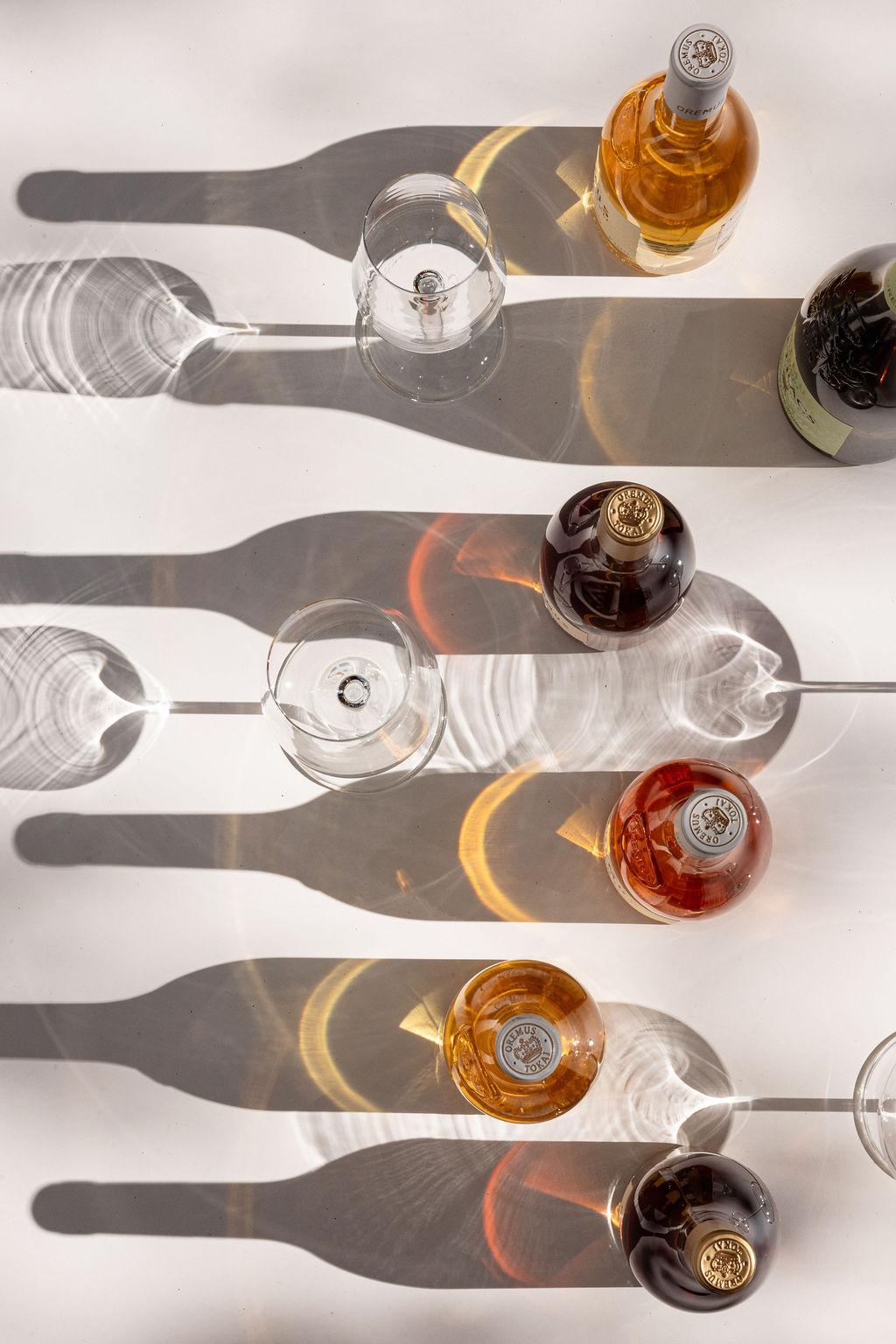
The heart of the wine region is the area surrounded by three Sátor hills: the Tokaj Kopasz hill, the Abaújszántó, and the Sátoraljaújhely Sátor hill. In this landscape, grape cultivation and aszú production have been continuous for centuries. UNESCO rewarded exactly this continuity, the fact that the tradition has survived to this day.
The UNESCO World Heritage Committee added Tokaj-Hegyalja to the list in 2002, based on two criteria. One states that the wine region represents a grape cultivation tradition that has continuously survived for more than a thousand years and remains untouched to this day. The other states that the whole landscape, along with the vineyards and the old settlements, presents a unique form of traditional land use. Thus, the recognition was for the entire functioning system, not a single building or product.
Tokaj is listed in the cultural landscape category. This category encompasses places where the natural environment and human labor are closely intertwined, and neither can be understood without the other. This fits Tokaj perfectly. The volcanic slopes, rivers, microclimate, and vineyards cultivated in the same way for centuries together create what we call a World Heritage site. The wine is the result of this whole.
The cultural landscape: the whole landscape as value
The size of the World Heritage site itself indicates what it is about. The strictly protected core area is about 13,000 hectares, and with its buffer zone, it covers more than 88,000 hectares, across the administrative areas of 27 settlements. Therefore, the protected area covers an entire region.
UNESCO's description speaks of a complex pattern of vineyards, farms, villages, and small towns, along with the historical network of deep cellars. The emphasis is on the pattern. It is not the most beautiful vineyard or the most famous cellar that holds value, but how these connect to each other and how human life has fit into the same order for centuries. The terraces, stone walls, water reservoirs, and wine houses are all part of this. These elements are all related to grape cultivation, but together they represent more than just a wine region.
The landscape is also associated with people, and they are diverse. UNESCO's justification highlights the social, ethnic, and religious diversity of the population, which, along with the fame of aszú, has shaped the rich cultural heritage of the wine region. This diversity is also reflected in the ownership structure. In Tokaj, there are many different owners present at once, from small private vineyards to church, state, and corporate estates. This is part of the heritage, but it is also one of the serious challenges of management, as many interests must be directed towards a common goal.
What does UNESCO protect in Tokaj?
The vineyards and the landscape
Volcanic hillsides, terraces, stone walls, riverine wetlands, millennia of cultivation.
The cellars
Hand-carved, volcanic rock cellar mazes, with noble cellar mold living on the walls.
The settlements
27 settlements, with old street layouts, wine houses, and the diverse cultural heritage of the residents.
The recognition is for the entire landscape that produces wine, not just for the wine itself.
The wine of kings: how Tokaj became world-famous
Tokaj did not become a World Heritage site by chance. The fame of the wine region has been at a European level for centuries. Tokaji aszú became a sought-after wine in the royal and princely courts of the continent in the 17th and 18th centuries, from Vienna to St. Petersburg. The wine trade reached distant markets through specific routes, mediated by Poland, and the wine was considered a status symbol.
The most famous saying is also linked to this era. According to tradition, King Louis XIV of France referred to Tokaji from the Rákóczi family with the now-quoted praise: the king of wines and the wine of kings. The original French, „C’est le roi des vins, et le vin des rois,” still appears in almost every summary about Tokaj. The exact circumstances of the quote are not entirely clear, but it well illustrates the status of the wine in contemporary Europe.
The interest of the Russian court reveals a lot. Tsar Peter I already sent envoys to Tokaj in 1714 to buy wine for the St. Petersburg court, and this relationship became institutionalized over time. In 1733, the Tokaji Russian Wine Purchasing Committee was established, which operated in the wine region until 1798 and regularly supplied aszú to the imperial table. Thus, Tokaji wine was the subject of serious commercial and diplomatic relations maintained for decades, primarily along the northern route leading to Poland and Russia.
The fame has not faded without a trace. This centuries-long, continuous recognition is one reason why the wine region still retains its old structure today. The cellars, wine houses, and mansions all date back to the time when Tokaj was a significant economic and political factor. The World Heritage title partly recognizes this continuous prestige.
The birth of aszú: legend and facts
The most famous story of the wine region is about the origin of aszú. According to tradition, Szepsi Laczkó Máté, a Reformed preacher, made the first aszú around 1631 from the grapes of the Oremus vineyard in Sátoraljaújhely, for the table of Lorántffy Zsuzsanna, the wife of Prince György Rákóczi I. This story is beautiful and often quoted, but it is more legend than precise fact.
The reality is more nuanced. Written records suggest that aszú existed earlier. The word appears in the form „aszúszőlőbor” in a 1571 Garai inheritance case, and a Latin-Hungarian dictionary from the era also recognizes the term. Thus, the production of aszú was not the invention of a single person but a gradually evolving practice made possible by the characteristics of the wine region. Noble rot, proper harvest timing, and long aging together shaped the wine we know today as aszú.
UNESCO's justification is also cautiously worded. It states that the documented history of the wine region dates back to 1561, and the production of aszú has been continuous in the area for centuries. Therefore, the exact „first” moment is uncertain, but the continuity is well documented. This is the essence from the perspective of world heritage, not a date, but the uninterrupted tradition.
Six grapes, many wines
Behind Tokaji wines stands a surprisingly narrow, precisely regulated range of grape varieties. Today, six white grape varieties are permitted in the wine region: furmint, hárslevelű, sárga muskotály, kövérszőlő, kabar, and zéta. Furmint is the dominant variety, accounting for about 60 percent of the planted area, hárslevelű is the second most important, and the remaining four varieties share the rest. Zéta and kabar are newer varieties created through crossing, originating from a combination of bouvier and traditional Tokaji grapes.
Many types of wine are made from these few varieties, and this diversity is also the value of the wine region. Dry furmint has become an independent, serious category in recent decades. In addition, late harvest wine, dry and sweet szamorodni, aszú, and the rarest, most concentrated item, eszencia, are also produced. These wine types are precisely defined by the 2012 regulation, which is also a sign of the strong quality control characteristic of Tokaj.
The names themselves preserve the history of the wine region. The word szamorodni is of Polish origin, meaning „as it was harvested,” and refers to the processing of the bunch without separate selection, working with both aszú grapes and healthy berries together. In contrast, aszú is made from hand-selected, shriveled berries, while eszencia is made from the almost spontaneously flowing, extremely concentrated juice of these berries. The sweetness of aszú was marked for centuries by the number of puttony, depending on how many puttony of shriveled aszú grapes were worked into the wine base. Although since 2013 the puttony number is no longer an official quality category, it remains an important historical concept in the tradition of aszú wines. This conceptual system has been refined over centuries and is still in use in the wine region. The wine types are not marketing categories but reflections of local knowledge.
The six permitted varieties
- Furmint, the main variety of the wine region, has tight acidity, well cellarable
- Linden leaf, aromatic, floral, the second most widespread
- Yellow muscat, aromatic, muscat character
- Fat grape, an old variety, prone to noble rot
- Kabar, a newer crossbreed, approved since 2006
- Zeta, a variety created through crossing, prone to botrytis
The world of cellars
One of the least visible layers of the landscape is the world of cellars. UNESCO specifically highlights that the hand-carved cellars, typically in volcanic rock, are the most characteristic structures of the wine region. They have two basic types: vaulted and dug into the ground. Some cellars have a history that dates back several centuries. According to tradition, the cellar of King Kálmán in Tarcal already existed in 1110. In Sátoraljaújhely, there is a multi-level cellar network that connects several separate cellars at different depths.
The size of the cellars is also noteworthy. Many of them are carved into riolitic tuff, several hundred meters long labyrinths, on multiple levels. The vaulted cellar has been bricked up, while the dug cellar has been cut directly into the soft volcanic rock, which is solid enough to prevent collapses in the tunnels, yet relatively easy to work with. This rock not only houses the wine but also keeps the cellar climate stable, both in winter and summer.
The cellars are not just storage spaces. The cellar mold, scientifically known as Cladosporium cellare, plays a special role in the aging of Tokaji aszú. This velvety, dark fungal coating thickly covers the walls of the cellars and helps maintain a constant humidity level. The typically 11 or 12 degrees Celsius, humid cellar air not only favors aging but also this mold. According to regional tradition, the noble mold covering the walls contributes to the aszú acquiring its characteristic taste and color. Although it is not visible from the surface, this is also part of the protected heritage.
The relationship between the landscape and wine
Tokaj-Hegyalja lies at the foot of the Zemplén Mountains, along the Bodrog River, at the confluence of the Bodrog and Tisza rivers. The geographical conditions directly determine the character of the wine. The wet habitats along the rivers create a humid microclimate, which is favorable for noble rot, or the Botrytis cinerea fungus. This fungus dehydrates and shrivels the grapes, which becomes the raw material for aszú.
UNESCO's justification also connects these factors. The volcanic slopes, the wet areas that provide a special microclimate, and the surrounding oak forests together make the landscape exceptionally suitable for grape cultivation and special winemaking. Thus, the wine is the result of a complex natural environment. If the wet habitats were to disappear, one of the fundamental conditions of the wine region would be compromised. That is why it is a protected area, not only in a cultural sense but also in a natural sense.
It is worth keeping the oak forests in mind as they have a dual role. On one hand, the surrounding forests are part of the microclimate, and on the other hand, the wood of the oak provides the barrels in which aszú and dry wines are aged. The cellars, the barrels, the forest, and the river thus belong to a single interconnected whole. When UNESCO protects the landscape as a whole, it recognizes this connection.
A wine region that has been legally protected for a long time
One of Tokaj's most special features is how long its regulation has been in place. In 1737, King Charles III of Hungary declared Tokaj a closed wine region by decree and defined the settlements where grapes suitable for Tokaji wine could be grown. According to UNESCO, Tokaj is one of the earliest legally defined wine regions in the world.
The regulation did not stop here. In the 18th century, a vineyard classification was also established, which categorized the growing sites into quality classes, well ahead of similar Western European systems. UNESCO's justification particularly highlights that the quality and handling of Tokaji wines have been strictly regulated for nearly three centuries. The documented history of the wine region actually dates back to 1561, and the production of aszú has been continuous for centuries. This long, uninterrupted tradition is one of the main reasons for the World Heritage title.
Tradition lives not only on paper. The production of aszú is still largely manual work today, as the shriveled, noble rot-affected berries must be selected one by one from the bunches. This knowledge has been passed down from generation to generation, and is just as much a part of the wine region as the cellars or the vineyards. The World Heritage title also recognizes this accumulated expertise, even if it cannot be marked with a sign.
Tokaj on the World Heritage map
Tokaj is not alone. Hungary has eight World Heritage sites, including the Danube bank in Budapest and the Buda Castle District, the old village of Hollókő, the caves of the Aggtelek Karst, the Pannonhalma Benedictine Archabbey, the Hortobágy, the early Christian tombs in Pécs, and the landscape of Lake Fertő. Among these, Tokaj-Hegyalja, along with the Fertő landscape, is one of the two sites specifically recognized as cultural landscapes, meaning where nature and human activity together provide value.
Its situation is also interesting in international comparison. Among wine regions, Saint-Émilion was the first to be included on the World Heritage list as a cultural landscape in 1999, which was a novelty for grape-growing areas. This was followed by the Alto Douro in Portugal in 2001, then Tokaj in 2002, and the Pico vineyard culture in the Azores in 2004. Thus, Tokaj is among the first in the list of wine regions recognized by the world not for a single product, but for the entire landscape.
The wine region also has a cross-border aspect. The historical area of Tokaj-Hegyalja partially extends into present-day Slovakia, where Tokaj grapes are also grown. UNESCO documents themselves raise the question of the cross-border expansion of the protective zone, based on the cooperation of Hungarian and Slovak heritage protection authorities. Therefore, the wine region does not stop at a national border, which further nuances what it means to talk about Tokaj as a unified landscape today.
This association says a lot about Tokaj's status. It is not the largest, nor the most famous wine region in the world, but due to its historical continuity, the age of its regulation, and the integrity of its landscape, it has entered the narrow circle considered part of humanity's common heritage.
Living heritage, real threats
Tokaj is a living landscape, not a frozen heritage. The grapes are still cultivated today, aging still takes place in the cellars, and people still live in the villages. UNESCO emphasizes that the continuity of traditional land use is an essential part of the World Heritage. This is also the greatest challenge, as it is harder to preserve a functioning landscape than a closed monument.
Over the centuries, the region has suffered much destruction. According to UNESCO's description, frequent military campaigns and fires have destroyed, and then rebuilt, a significant portion of the historical buildings. The restorations of recent decades have followed international heritage conservation principles, including the Venice Charter, thus preserving the authenticity of the remaining buildings. The settlements have retained their basic structure to this day, as well as their connection to the landscape. The overall image of the wine region has essentially remained unchanged for centuries.
Protection operates on multiple levels. Since 2012, the entire area has been protected as a historical landscape under cultural heritage protection law, and 61 percent of the historical landscape is part of the Natura 2000 network, thus enjoying European-level nature conservation. The wetlands along the Bodrog and Tisza rivers have received international Ramsar protection. At the same time, UNESCO openly names the threats: the disappearance of wetlands, the expansion of built-up areas, climate change, and specifically the impacts of mining and quarrying. The title does not automatically provide protection; it requires continuous, conscious management.
What does all this mean at the table?
When you sit down with a glass of wine in Tokaj, you are sitting in the middle of a World Heritage landscape. The vineyard from which the wine came, the cellar where it was aged, the village where the wine house stands, are all part of the same recognized whole. Thus, the Tokaj World Heritage title is not a distant, official stamp, but part of the everyday landscape.
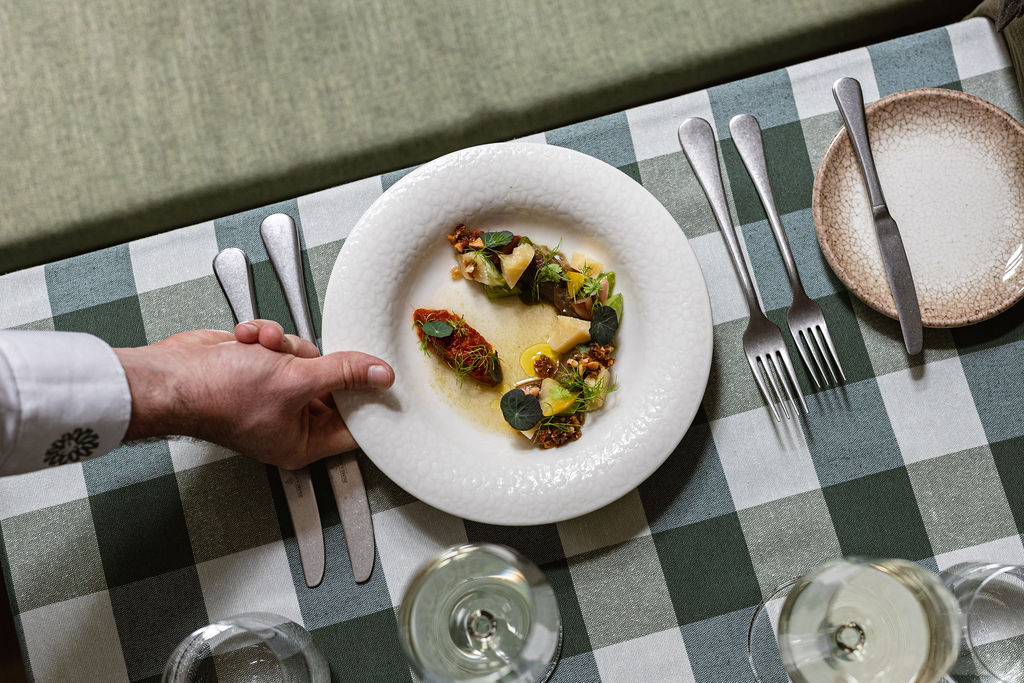
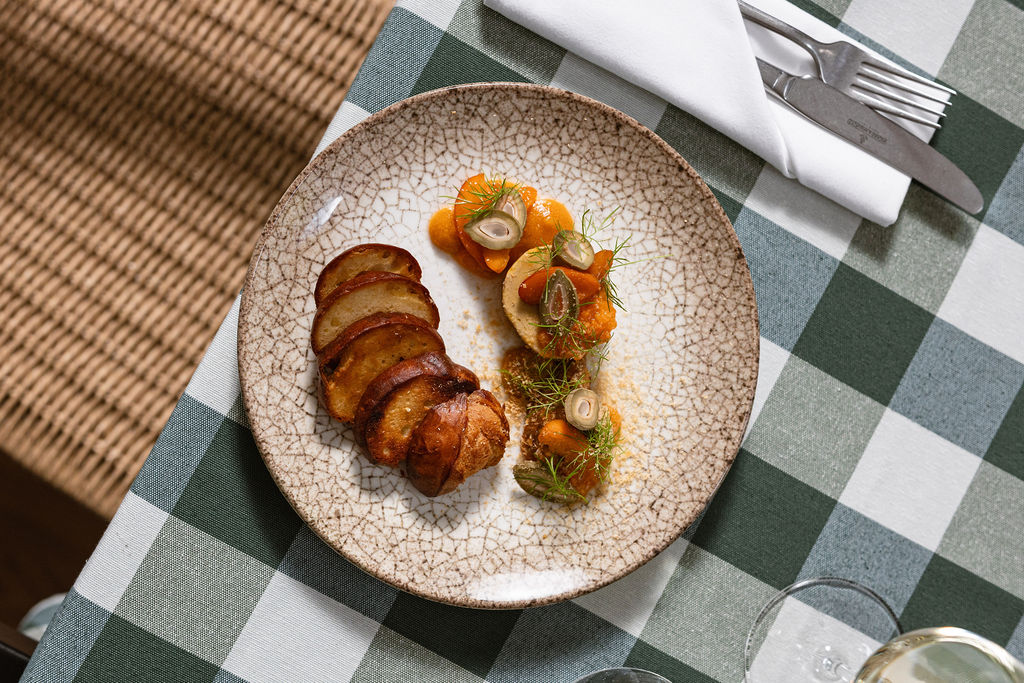
This is what we love to show at Galuschka. A Tokaj dinner is not just a meal, but an opportunity to get to know the multiple layers of the landscape, from the history of the wine region to the world of cellars, from dry Furmint to Aszú. Our wine list is organized by terroir so that the landscape can also be tasted through the wines. Behind a glass lies the vineyard, the variety, the wine type, and the centuries-old knowledge associated with them, and all of this is worth getting to know slowly and attentively.
Next time you hear about Tokaj, it's worth thinking about the entire region, not just the wine. The wine is just the most spectacular part of what the world deemed worthy of preservation in 2002. The cellars, the settlements, the tradition, and the landscape are all behind it, even if at first glance only the glass is visible.